Why Companies Are Choosing a Different Approach to Sales Tax
For many organizations, sales tax has become one of those business processes that quietly grows more difficult over time.
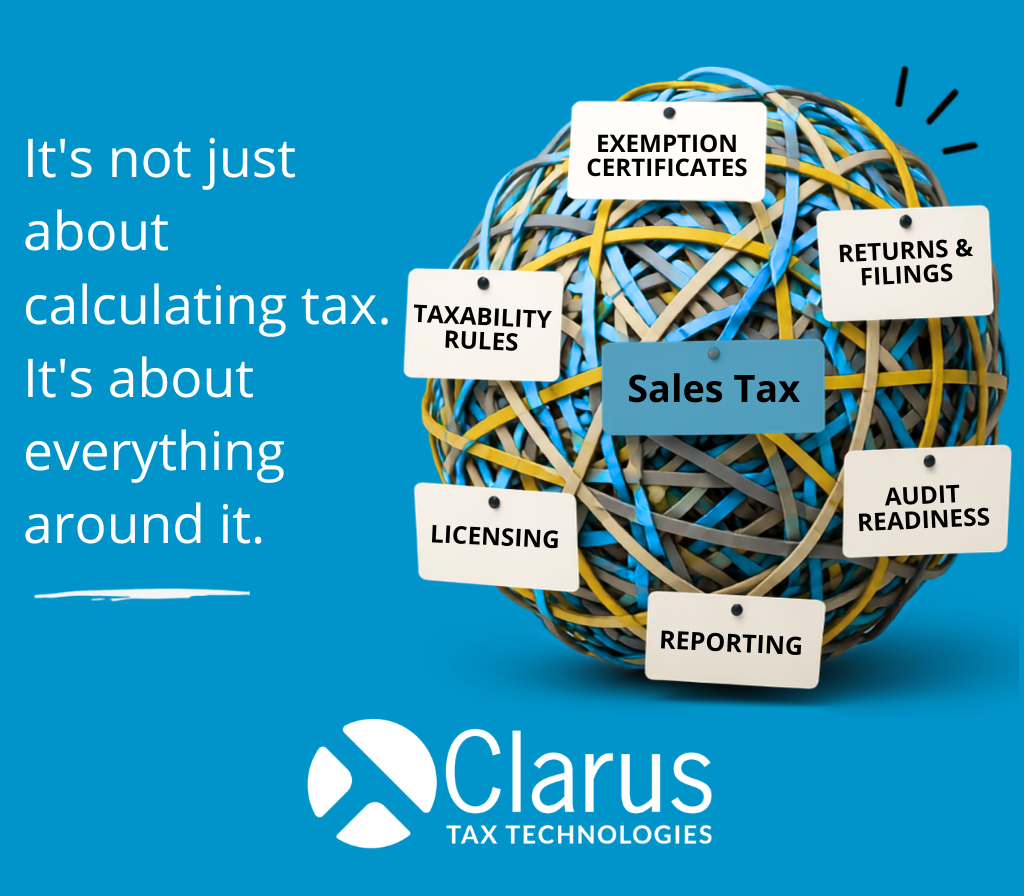
Not because calculating tax has become dramatically more complicated, but because the work surrounding it has. As companies expand into new markets, introduce new products, add ecommerce channels, and serve customers across more jurisdictions, the operational side of sales tax becomes increasingly complex. Exemption certificates need to be maintained, taxability rules evolve, reporting requirements grow, and filing deadlines multiply. Before long, finance teams are spending as much time managing the process as they are managing the tax itself.
For years, many businesses simply accepted this complexity as part of the job. Manual workarounds, spreadsheets, disconnected systems, and multiple handoffs became the normal way of operating. The assumption was that this was simply the cost of managing sales tax.
Today, that mindset is beginning to change.
More organizations are stepping back and asking a different question. Instead of focusing solely on software features, they're evaluating whether their overall approach to sales tax is helping the business—or creating unnecessary work behind the scenes.
Looking Beyond Feature Comparisons
When companies evaluate sales tax solutions, the conversation often begins with functionality. Does the software calculate tax accurately? Can it manage exemption certificates? Does it integrate with the ERP? Can it automate returns?
Those are important questions, but they rarely tell the whole story.
Once a solution is implemented, the day-to-day experience becomes just as important as the technology itself. Businesses begin asking different questions. How easy is it to get help when something changes? Does the provider understand the operational realities of sales tax? Can the solution adapt to the way the business already works, or does the business have to adapt to the software?
Those questions don't always appear in a product comparison, but they often determine whether a solution delivers long-term value.
Sales Tax Is More Than a Compliance Function
One of the biggest misconceptions surrounding sales tax is that it only becomes relevant when it's time to file a return or respond to an audit.
In reality, sales tax influences many parts of an organization every day. Customer onboarding, product taxability, exemption certificate management, reporting, licensing, audit preparation, and finance operations all rely on accurate and accessible tax information. When those processes become disconnected, the impact extends well beyond compliance.
The challenge isn't always calculating the correct amount of tax. More often, it's the operational work surrounding the calculation—tracking documentation, validating certificates, researching exceptions, and maintaining visibility across multiple systems and jurisdictions.
As organizations grow, those activities can consume significant time and resources if they continue to rely on manual processes.
A Different Philosophy
One theme consistently emerged when talking with the Clarus team: the conversation wasn't centered on having the largest platform or the longest list of features. Instead, it focused on creating a better experience for the businesses responsible for managing sales tax every day.
Founded by sales tax professionals, Clarus approaches the problem from an operational perspective. The company understands that finance and tax teams are not simply looking for another application. They want solutions that reduce complexity, improve visibility, and fit naturally into the systems and processes they already use.
That philosophy extends beyond the technology itself. It also shapes the customer experience.
Rather than emphasizing automated ticket queues or multiple layers of support, Clarus focuses on providing dedicated contacts and direct access to people who understand both the software and the business challenges customers are trying to solve. For organizations managing compliance across multiple jurisdictions, that continuity can be just as valuable as the software itself.
Staying Focused on the Problem
Another aspect that distinguishes Clarus is its focus.
While many technology providers continue expanding into broader platforms and adjacent markets, Clarus remains focused on the core areas of sales tax compliance: tax calculation, exemption certificate management, returns filing, and business license management.
That focus allows the company to continue developing expertise in one discipline while helping customers simplify processes that often become fragmented over time.
For many organizations, that specialization offers an alternative to adopting increasingly complex platforms that attempt to solve every business problem at once.
A Shift in the Conversation
Sales tax will never be simple. Regulations will continue to change, businesses will continue expanding, and compliance requirements will continue evolving.
What is changing is the way organizations evaluate potential solutions.
Instead of asking only, "What features does this platform offer?" many are also asking, "What will it be like to work with this company over the next five or ten years?"
That shift reflects a broader trend across the ERP community. Technology remains essential, but experience, expertise, and long-term partnership have become equally important considerations.
For companies looking to simplify sales tax compliance, the most meaningful difference may not be found on a feature checklist. It may be found in choosing the right partner to help make an inherently complex process more manageable for the people responsible for it every day.
Stay Updated on ERP & Business Software
Get the latest insights, comparisons, and resources delivered straight to your inbox.
Join the Conversation
Share your thoughts and comments on this article.