
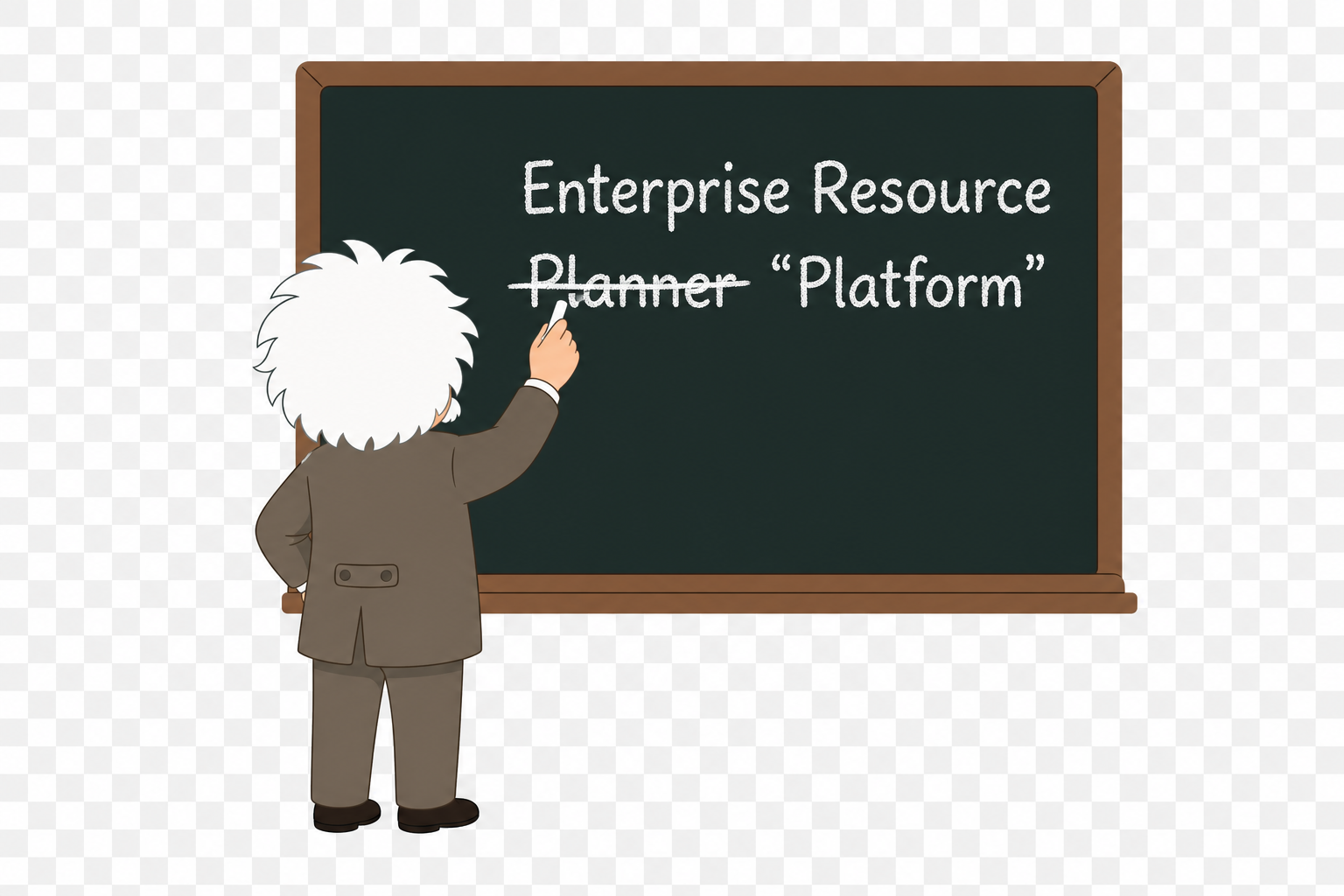
Murph coins new definition for ERP

<span id="hs_cos_wrapper_name" class="hs_cos_wrapper hs_cos_wrapper_meta_field hs_cos_wrapper_type_text" style="" data-hs-cos-general-type="meta_field" data-hs-cos-type="text" >Murph coins new definition for ERP</span>

Our own "Murph" has coined a new definition for ERP...

It was sometime around 1990 that the abbreviation ERP was coined to represent the term ‘Enterprise Resource Planning (or Planner).’ It represented an extension of the systems that IBM implemented for Materials Resource Planning (MRP) in the 1960s.

ERPs were supposedly designed to encompass the vast majority of business processes that larger ‘Enterprise’ companies needed to manage themselves. By unifying business processes within the ERP, businesses gained what was supposedly a ‘single source of accurate date’ which today is commonly referred to as a ‘single source of truth.’

But the reality is that as businesses have continued to grow and evolve, things that most ERPs provide by on-their-own are inadequate for today’s environment. As...

Log in to continue reading

This article is available for FREE to registered readers of The ERP Update.

William Murphy
About the Contributor

William Murphy

William (Bill) Murphy, better known as "Murph," is responsible for day-to-day technical content. He is also serves as Administrator for the Top Advisor Awards Program. Murph is an Advanced Certified ProAdvisor with over 30 years of QuickBooks consulting experience. He has more than 45 years of experience in Business, Finance and Public Accounting. For many years Murph was the “anchor” of the National Advisor Network’s online forum (now the Woodard forum) and three-time consecutive winner of the NAN Online MVP award. Murph has published numerous articles in industry publications and served as Technical Editor for Business Analysis with QuickBooks by Wiley Publishing.

Blog Post CTA

Stay Updated on ERP & Business Software

Get the latest insights, comparisons, and resources delivered straight to your inbox.

Join the Conversation

Share your thoughts and comments on this article.