
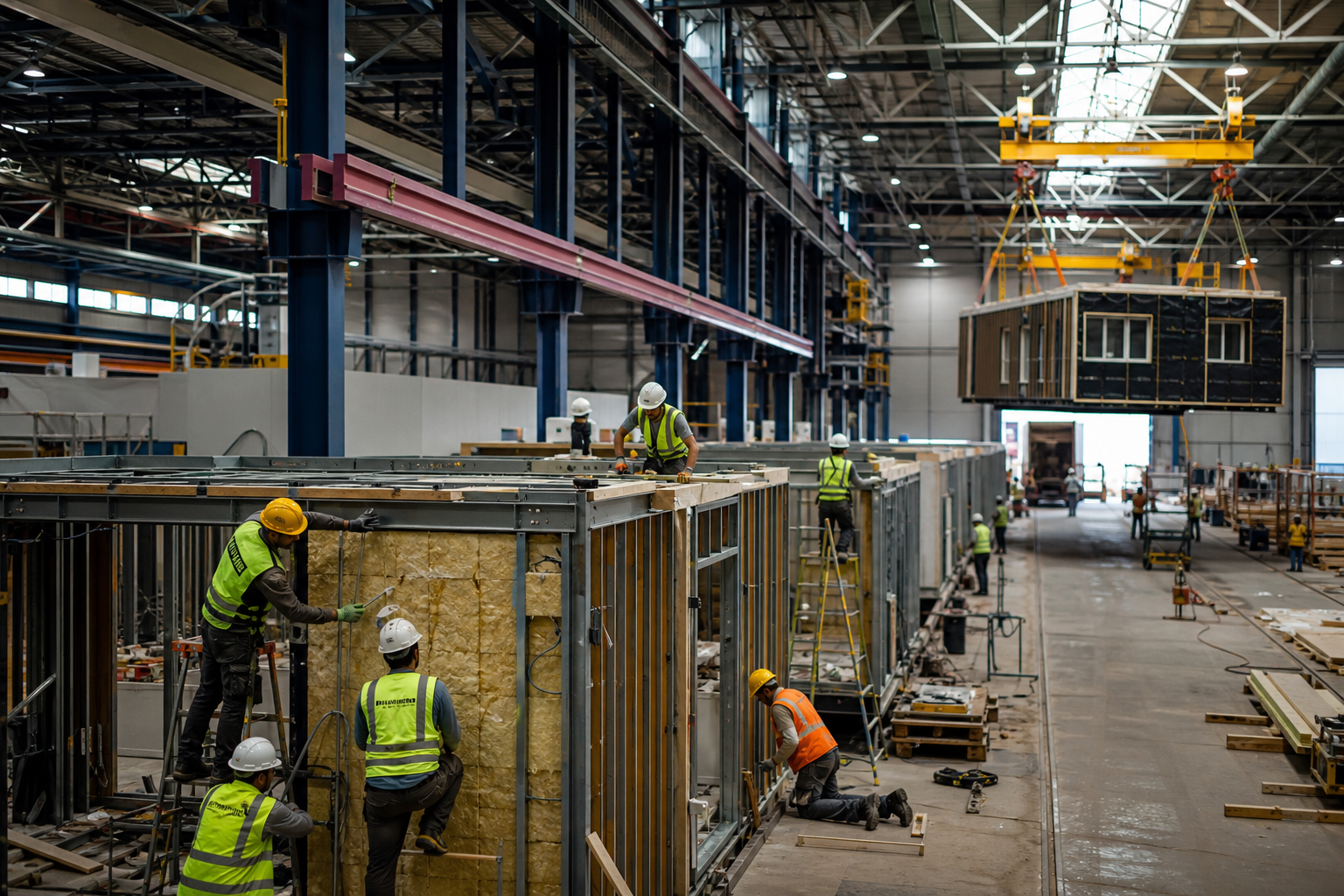
Modular construction, a building method in which a significant portion of a structure is manufactured off-site in a factory and then transported and assembled on-site, is often described as a faster way to build. While that is true, it doesn’t tell the whole story.
The more consequential change is that modular construction transforms building from a largely sequential, site-centered activity into a synchronized production-and-assembly system. That means design, procurement, factory production, site preparation, transportation, and installation all proceed at once.
This creates enormous opportunity—and a much greater need for coordination.
A U.S. Department of Energy (DOE)-sponsored study, comparing 48 modular multifamily projects with 158 site-built projects, found that the modular...


Join the Conversation
Share your thoughts and comments on this article.